
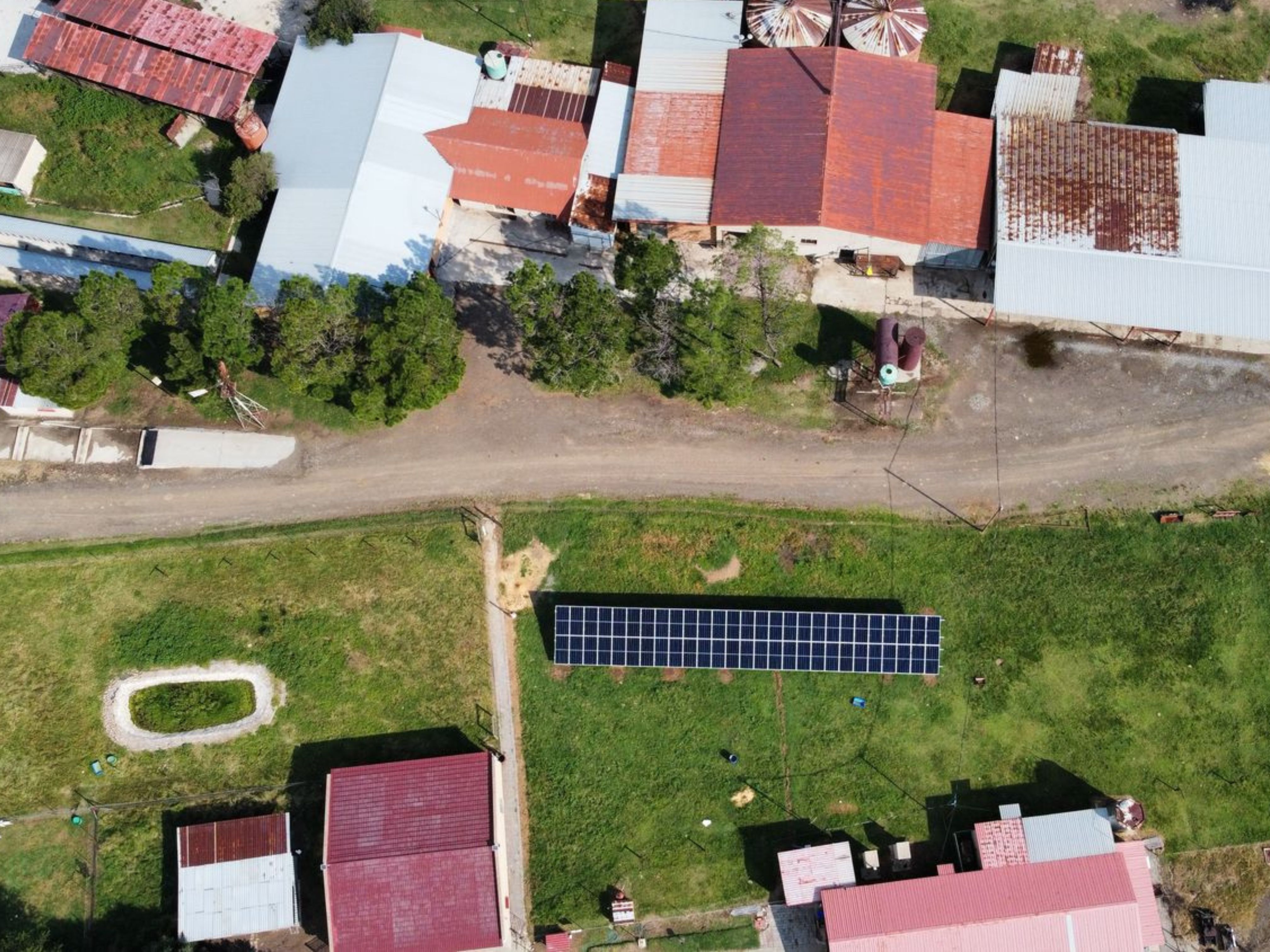
In some parts of inland SA, getting Eskom to extend a line costs more than building an off-grid solar system. In others, the grid reaches but Stage 4 load shedding means it's effectively off-grid five hours a day. Off-grid solar isn't always the answer — for most farms a hybrid system is cheaper — but where it's the right call, it transforms operations.
When off-grid solar actually makes sense
Off-grid is the right answer when one of these is true:
- Extending Eskom is uneconomic. A new line over 1–2km can cost R500 000 – R1.5 million. At that point, an off-grid solar system is often cheaper to install and has no monthly bill afterwards.
- You're tired of load shedding. If your operation can't tolerate 4–8 hours of daily outages — dairy, cold chain, intensive irrigation — going off-grid eliminates Eskom dependence entirely.
- You want predictable energy costs. Off-grid means no future tariff increases. Eskom is up 24% over three years and rising. A fully owned solar system locks in your cost for the next 25 years.
- The site is genuinely remote. Standalone outbuildings, remote pump stations, distant labourer housing — these are often cheaper to run off-grid from day one.
The four components of an off-grid farm system
An off-grid system has to do what the grid does — supply power any time of day, in any weather. Which means four pieces, properly sized.
1. Solar PV array (oversized)
You design for the worst sunny week, not the best. That typically means a PV array 1.2x what a grid-tied system would need. Tier-1 modules from Canadian Solar, LONGi, JA Solar or Trina Solar.
2. Battery bank (right-sized)
Lithium iron phosphate (LiFePO4) is the only realistic choice. Lead-acid won't survive deep cycling year after year. Greenrich and Tesla are the brands we install most often. Sizing rule: 1.5 days of "essential autonomy" — enough battery to carry critical loads through a cloudy day and a cold night without the generator kicking in.
3. Hybrid inverter (sized to peak load)
The inverter has to handle simultaneous draw from the highest motor load on the farm. Cold compressors, milking pumps, packhouse machinery — all firing up at once. Three-phase units from Deye, Sunsynk, Sigenergy, GoodWe and Megarevo cover most farm scales.
4. Backup generator (sized to 60–70% of peak)
A small diesel generator covers the worst-case scenario: a week of overcast weather, an unexpectedly heavy load, a battery that needs maintenance. It runs maybe 5–10% of the year if everything else is sized well.
Sizing methodology (without a spreadsheet)
The proper way to design off-grid is a detailed load profile — every motor, every light, every appliance, hour by hour for a week. That's what we do during the assessment.
Hybrid vs off-grid — which one for your farm?
If Eskom reaches the site reliably and load shedding is manageable, grid-tied hybrid is almost always the cheaper, smarter choice. You get most of the savings of off-grid without the cost of a battery sized for true autonomy.
Full off-grid makes economic sense in three situations: grid extension is genuinely prohibitive, the operation can't tolerate any outage, or the site is intentionally remote.