
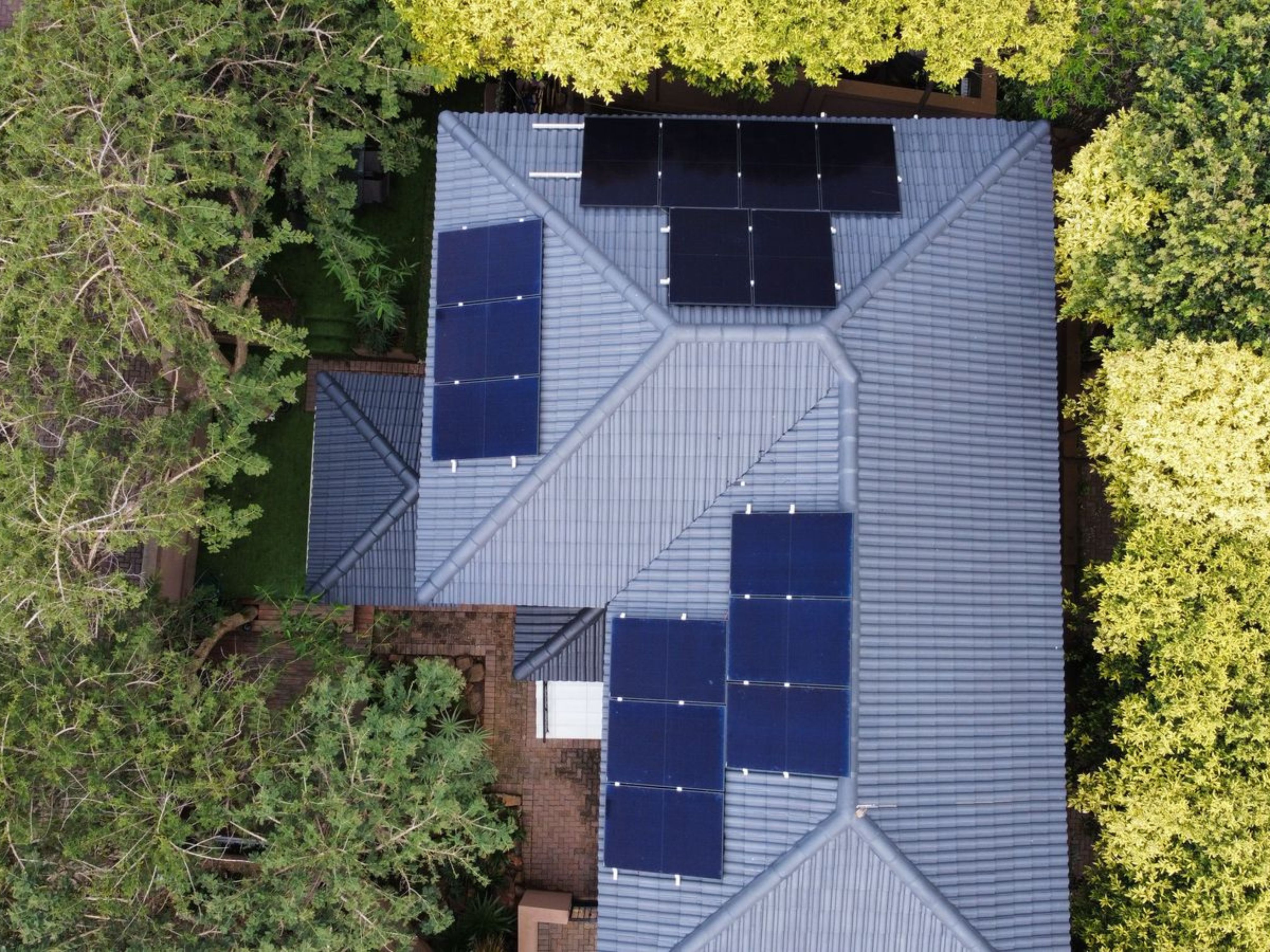
"How much does a solar system cost for my house?" is the most asked question in South African renewable energy right now. The honest answer is: it depends on what you mean by "system" and what you mean by "house". But here are the real numbers for 2026, with no marketing fluff.
The 2026 SA residential market — current prices
For a properly engineered residential install with tier-1 equipment:
| System size | Indicative cost | Suits |
|---|---|---|
| 5 kW | R75 000 – R120 000 | Apartment, small home, R2k–4k bill |
| 8 kW | R90 000 – R140 000 | Mid-size family home, R3k–5k bill |
| 10 kW | R130 000 – R200 000 | Larger family home, R4k–7k bill |
| 16 kW | R180 000 – R350 000 | Lifestyle estate, large home, R7k–12k bill |
| 20 kW+ | R380 000 – R500 000+ | Smallholding, estate, near-off-grid |
All figures include panels, inverter, mounting, installation labour and a basic battery for backup (5–16kWh depending on size). They exclude SSEG application costs (R3 000 – R8 000) and any electrical upgrade work needed on your DB board.
What you're actually paying for
A residential solar system isn't one thing — it's roughly five line items:
- Panels (25–30%). Tier-1 modules like Canadian Solar, LONGi, JA Solar, Trina Solar.
- Inverter (20–25%). The "brain" that converts solar DC to household AC. Deye, Sunsynk, Sigenergy, GoodWe etc.
- Battery (20–30%). The biggest cost driver in modern hybrid systems. LiFePO4 only — lead-acid is a dead end.
- Mounting + structure (5–8%). Wind-rated, UV-stable brackets. Often more important than people realise.
- Installation labour, wiring, certification (15–20%). The actual person on the roof, the cabling, the DB upgrades, the SSEG application.
If a quote doesn't break those out, ask for it broken out. The breakdown tells you a lot.
Why "cheap" residential quotes should worry you
The sub-10kW residential market in SA is competing fiercely on price. We've seen 8kW systems quoted at R70 000. That's roughly half what a properly engineered system at the same size should cost.
What gets cut to hit those numbers:
- No-name panels with no actual warranty enforcement
- Undersized inverters that fail inside two years
- Lead-acid batteries sold as "lithium equivalent"
- No structural sign-off, no SSEG application
- One-man installer with no insurance, no aftercare
The system might work for a year. Then your battery dies and the warranty turns out to be impossible to claim because the installer no longer exists. The market for properly engineered residential systems is more expensive but more honest. R14 000 – R25 000/kWp installed is the realistic floor for tier-1 quality in 2026.
Why we don't do residential under 10 kW
We've deliberately positioned QES outside the sub-10 kW residential market. From 10 kW upwards the engineering and economics line up well — there's room to build something that works, that pays back, that lasts. Below 10 kW, the price war makes good engineering uneconomic. We'd rather refer you to a trusted partner than build you something we wouldn't put on our own house.
What's actually in a 10 kW system (a real example)
| Component | Spec |
|---|---|
| Panels | 16× LONGi Solar 625W (~10kWp) |
| Inverter | 10kW Deye hybrid inverter |
| Battery | 16kWh Deye LiFePO4 |
| Mounting | UV-stable aluminium, wind-rated |
| Cabling, DB upgrade, SSEG | Included |
| Indicative total | ~R190 000 |
That's the system on a typical Johannesburg family home. The monthly Eskom saving on a R5 000 bill comes to roughly R3 500. Payback period (no Section 12B for private homes) is about 3.5 years.
Finance options
Most banks now offer "green loans" specifically for solar at slightly discounted rates. ABSA, FNB, Standard Bank and Nedbank all have residential solar finance products. Typical structure: 5–7 year repayment, 11–13% interest, monthly instalment usually less than your current Eskom saving.
Translation: you don't pay anything new — the monthly finance cost is less than the bill you were already paying. You just have a R220 000 asset on your home at the end of it.
How to know if your quote is reasonable
Three quick checks:
- Cost per kWp installed. A 10 kW system should fall between R18 000 and R20 000 per kWp. Below R18 000 is suspicious; above R25 000 is being overpriced.
- Brand names on every component. "5kW inverter" isn't enough — what brand, what model, what warranty?
- SSEG paperwork included. If not, that's a R3 000 – R8 000 cost coming at you later.
The free assessment
Send us your last three Eskom bills and a few photos of your roof. Inside 24 hours we'll come back with an indicative system size, full equipment breakdown, indicative price range and an honest assessment of payback for your specific household.