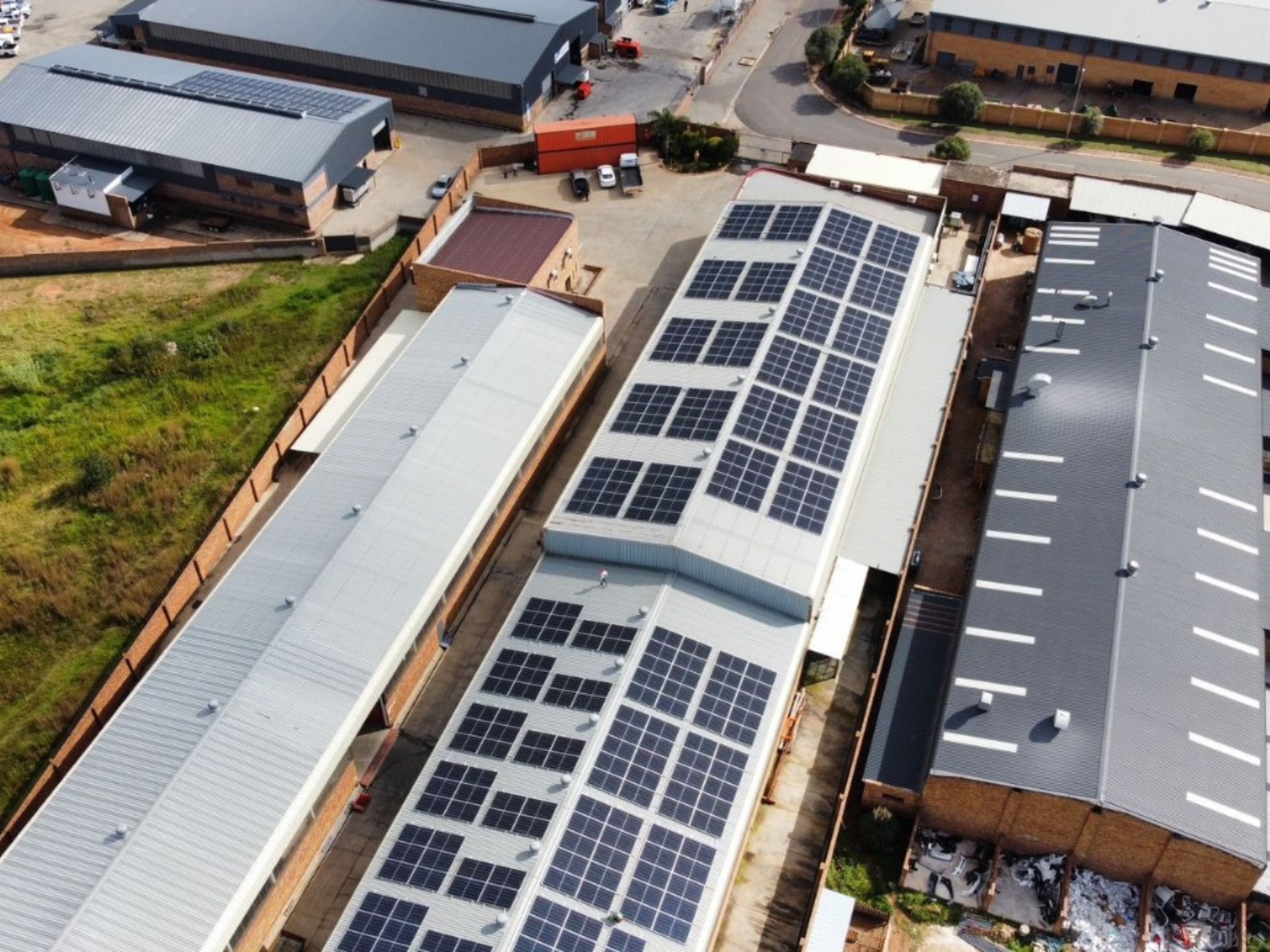
Commercial solar in SA has gone from "nice to have" to "essential to compete" in three years. Tariffs are up 24% since 2024. Demand charges keep growing. Load shedding hits businesses harder than residential because they can't just delay running the dishwasher. If you're a business owner thinking about solar, here's what actually matters before you start asking for quotes.
1. Section 12B — your biggest financial lever
Section 12B of the Income Tax Act lets businesses deduct 100% of the cost of a solar PV system (up to 1MW) in the year the system is brought into use. The deduction covers panels, inverters, batteries, mounting and installation labour.
On a R2 million 150kW commercial system, a business taxed at the 27% corporate rate recovers around R540 000 in year-one tax relief — on top of the Eskom savings.
The temporary 125% enhanced allowance (Section 12BA) expired on 28 February 2025 and was not renewed in the 2025 Budget. But Section 12B itself is permanent legislation — it isn't going anywhere.
2. SSEG approval — the paperwork you can't skip
Any grid-tied system over a small threshold (usually 1kVA in most municipalities, sometimes 3kVA) requires a Small-Scale Embedded Generation (SSEG) application with your local authority or Eskom Direct. This is the document that says "yes, this private generator can safely feed into the grid".
It typically takes 4–8 weeks to approve. A reputable installer handles the entire application on your behalf — single-line diagram, NRS 097 compliance, structural sign-off, the works. If you're getting quotes and the installer doesn't mention SSEG, ask why.
3. Three system types — pick the right one
Grid-tied (no battery)
Solar feeds your building during the day. Eskom takes over at night and on cloudy days. Cheapest option, fastest payback (1.5–2.5 years for commercial). Does nothing during load shedding.
Hybrid (solar + battery)
Solar by day, battery covers evening peak and load shedding outages. More expensive (around 1.5x grid-tied), best for businesses where downtime costs money. This is what most commercial customers actually need.
Off-grid (solar + battery + generator)
Full independence from Eskom. Only makes economic sense in remote sites or where grid reliability is genuinely catastrophic. Overkill for most urban commercial properties.
For most commercial sites we recommend hybrid — the price premium over grid-tied is small, and the operational resilience is enormous. Lost productivity during load shedding usually costs more than the additional battery.
4. Single-phase vs three-phase
Most commercial sites are three-phase. The inverter system has to match. Three-phase hybrid inverters from Deye, Sunsynk, Sigenergy, GoodWe, Solis, Atess and Megarevo all work for commercial scale — the choice depends on system size, monitoring needs and budget. If you're being quoted a single-phase inverter for a three-phase building, walk away.
5. NRS 097 compliance
NRS 097-2-3 is the South African standard for grid-tied embedded generators. Any system connected to the grid must comply. This isn't optional. A non-compliant install will be rejected by your municipality or, worse, cause damage to the grid that you'll be liable for. A reputable installer keeps their inverters' NRS 097 compliance certificates on file and provides them on request.
6. The realistic timeline
For a typical 50–250kW commercial install:
| Stage | Time |
|---|---|
| Free assessment + indicative quote | 24 hours |
| Site survey | 1–2 weeks after assessment |
| Engineered design + final quote | 1–2 weeks after survey |
| SSEG application + approval | 4–8 weeks (parallel with design) |
| Equipment lead time | 2–4 weeks |
| Install + commissioning | 7–20 working days on site |
| Total | 6–12 weeks from yes to live system |
7. Equipment that matters
Tier-1 panels, tier-1 inverters, lithium iron phosphate batteries. Period.
- Panels: Canadian Solar, LONGi, JA Solar, Trina Solar — all carry 25-year linear output warranties.
- Inverters: Deye, Sunsynk, Sigenergy, GoodWe, Solis, Tesla, Atess, Megarevo for commercial scale. 5–10 year manufacturer warranty.
- Batteries: LiFePO4 from Greenrich, Tesla. 10-year warranty, around 6 000-cycle rated.
Avoid no-name imports. The cost saving disappears the first time the warranty doesn't honour.
What to bring to your free assessment
- Your last 3 utility bills
- A photo of your DB board and incoming supply
- Roof type and approximate available area
- An idea of which loads you absolutely cannot afford to lose during an outage
That's enough to come back to you within 24 hours with an indicative system size, price range and payback estimate. No commitment, no pressure.